1. Quick Reference: Whitewall Styles & Eras
Selecting the right whitewall depends heavily on the era of your vehicle. Use these benchmarks to find your ideal match:
- Wide Whitewall (2.5" – 3.0"): The iconic look of the 1930s through the 1950s. These were the primary choice for 1950s cruisers like the Chevrolet Bel Air.
- Medium Whitewall (1.5" – 2.25"): A transition-era style common in the early 1960s. These are best suited for early 60s luxury sedans.
- Narrow Whitewall (0.25" – 1.0"): Popularized in the late 1960s and 1970s. This is the standard "thin-stripe" look for Cadillacs, Lincolns, and traditional Lowriders.
- Pinstripe White (Under 0.25"): A subtle accent from the 1970s through the 1990s, often found on luxury coupes and Town Cars.
- Raised White Letter: Features white lettering rather than a solid stripe. This became the dominant look for muscle cars and off-road trucks from the late 1960s to today.
2. The History of the Whitewall
The "look" of the whitewall tire was born from a shift in chemical engineering:
- The All-White Era: Early tires were made of pure natural rubber and zinc oxide, making them entirely white but prone to rapid wear.
- The Hybrid Era: To improve durability, manufacturers added carbon black to the tread area only. This created the iconic black tread with white sidewalls.
- The Modern Era: Today, whitewalls are a deliberate styling choice. White rubber is bonded to the black sidewall during a specialized vulcanization process to ensure the stripe does not peel.
3. Construction: Bias-Ply vs. Radial
Classic car owners must choose between two distinct internal structures when buying whitewalls:
- Bias-Ply: The authentic choice for "concours" restorations. These provide the original high-profile look and wandering steering feel of the 1940s and 50s.
- Radial: The best choice for "drivers." Modern radials offer significantly better grip, better heat dissipation, and a smoother ride while maintaining the classic whitewall exterior.
4. Maintenance and Care Protocol
Unlike standard blackwall tires, whitewalls require a specific cleaning regimen to prevent yellowing caused by UV exposure and "blooding" (antioxidants migrating from the black rubber).
Cleaning Checklist:
- Supplies: Non-abrasive whitewall cleaner, soft-bristle brush, and microfiber towels.
- Avoid Bleach: Harsh chemicals like bleach can dry out the rubber, leading to cracking (dry rot).
- The SOS Method: Many enthusiasts use specialized fine-grade abrasive pads (like SOS pads) with gentle pressure to remove stubborn brown stains.
- Protection: Apply a water-based (non-silicone) tire dressing to provide UV protection without attracting dust.
5. Buying Guide: Finding the Right Fit
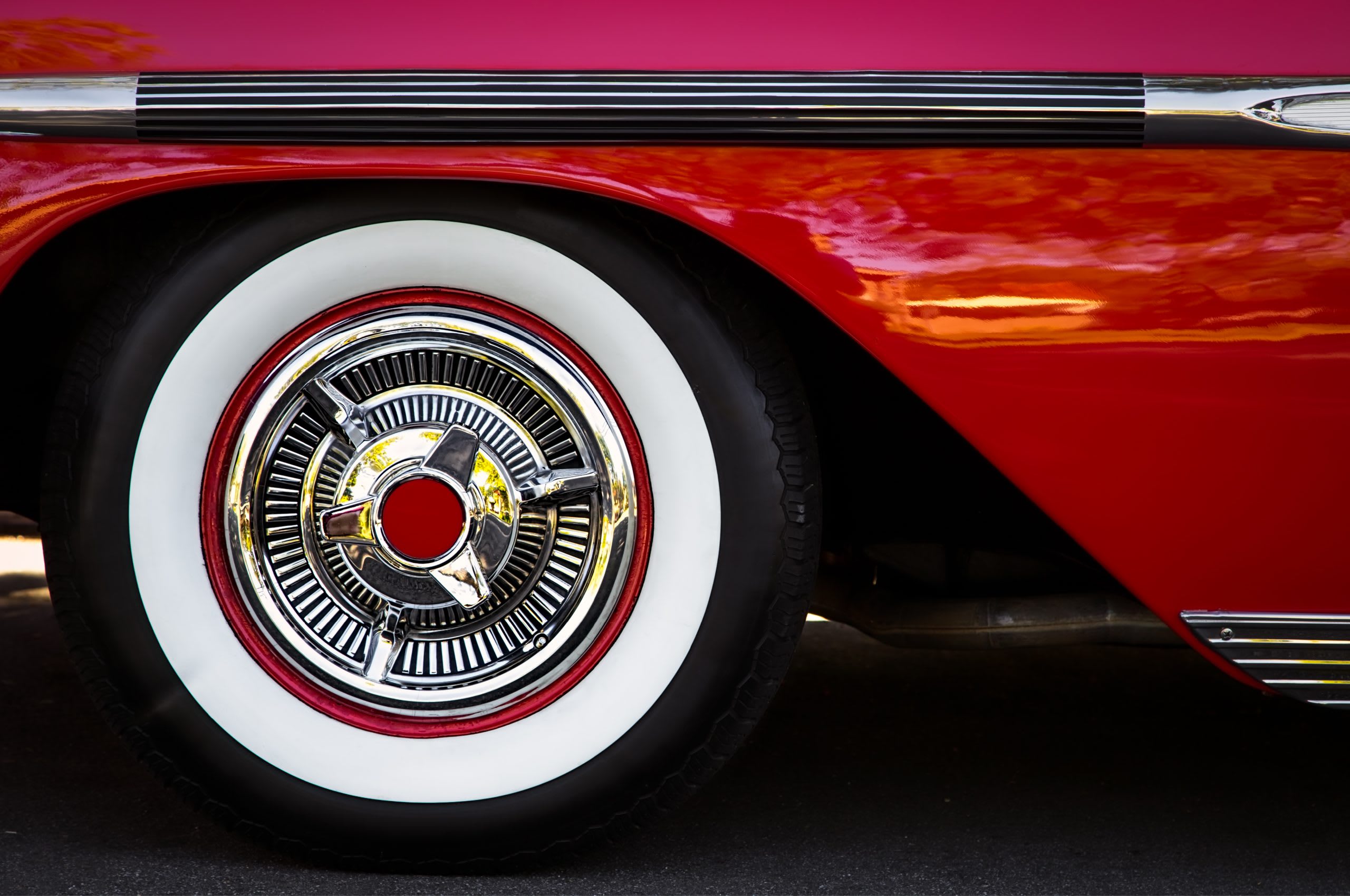
When shopping for tires for vintage vehicles, consider these three factors:
- Period Correctness: A 1955 Cadillac looks best with a 3-inch wide whitewall, while a 1975 Eldorado requires a narrow 1-inch stripe for an authentic look.
- Wheel Compatibility: Ensure your classic rims are compatible with modern radial beads if you are upgrading from bias-ply.
- The Spare Tire: For show cars, always purchase a matching fifth tire to ensure the trunk-mounted spare matches the set.
Summary and Next Steps
Whitewall tires transform a vehicle into a rolling piece of history. Whether you need the nostalgic look of American Classic radials or a sporty narrow-stripe for a custom build, selecting the correct width is the key to aesthetic success.
